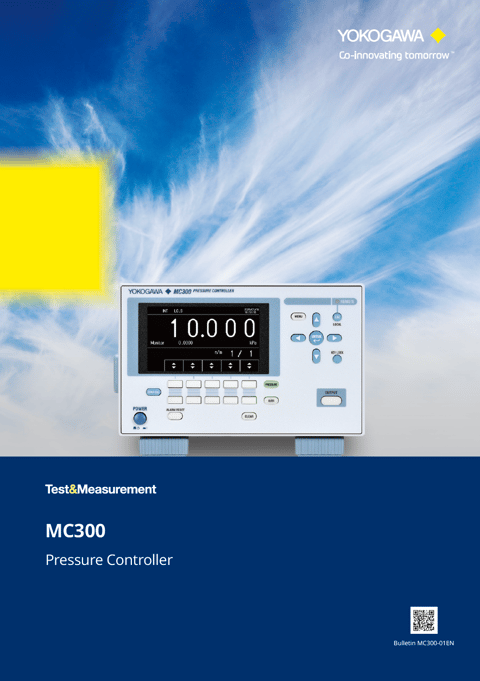
Pressure Controller for Pressure Sensor Final Inspection|Shorter Inspection Takt Time and Long-Term Stable Operation
Continuous control with a needle valve mechanism shortens takt time in mass-production pressure sensor inspection
A needle-valve pressure controller can be used for final inspection of pressure sensors on mass-production lines in the automotive, industrial equipment, and medical device industries. By combining high-speed pressurization with low overshoot, it can help shorten inspection takt time, streamline pressurization and depressurization testing, and support long-term stable operation.
Summary
Challenge
The structural limitations of solenoid valve systems, together with the labor hours required for testing during both pressurization and depressurization, stand in the way of shorter production takt times. In addition, the durability issues of solenoid valve systems lead to higher equipment maintenance costs and affect stable production.
Solution
Continuous flow control with a needle valve mechanism achieves both high-speed pressurization and low overshoot. Its long-life design also reduces the maintenance burden and contributes to stable production.
Expected Benefits
Shorter inspection takt time, more efficient pressurization and depressurization testing, and long-term stable operation.

Yokogawa Test & Measurement Corporation
Yokogawa Test & Measurement Corporation is the test and measurement instrument business of the Yokogawa Electric Group. The company develops, manufactures, and sells a wide range of precision measurement solutions, including oscilloscopes, power analyzers, data acquisition systems, optical communication test equipment, and pressure measurement instruments. The Yokogawa Electric Group has a track record of over 100 years in the development and provision of precision measurement instruments. In the field of pressure measurement, the group has accumulated technology over many years and developed a pressure measurement platform built around its proprietary silicon-based resonant sensor technology. Through a product portfolio spanning from lab to field — including the MT300, the CA700 Pressure Calibrator, and the MC300 Pressure Controller — Yokogawa supports customers' pressure measurement needs.
Pressure Controller for Pressure Sensor Final Inspection
Pressure sensors are built into a wide variety of products, including automobiles, industrial machinery, and medical devices, and their characteristics, such as measurement range, accuracy, response, and hysteresis, differ according to their measurement principle and application. As a result, mass-produced pressure sensors require performance evaluation and final inspection suited to their individual characteristics.
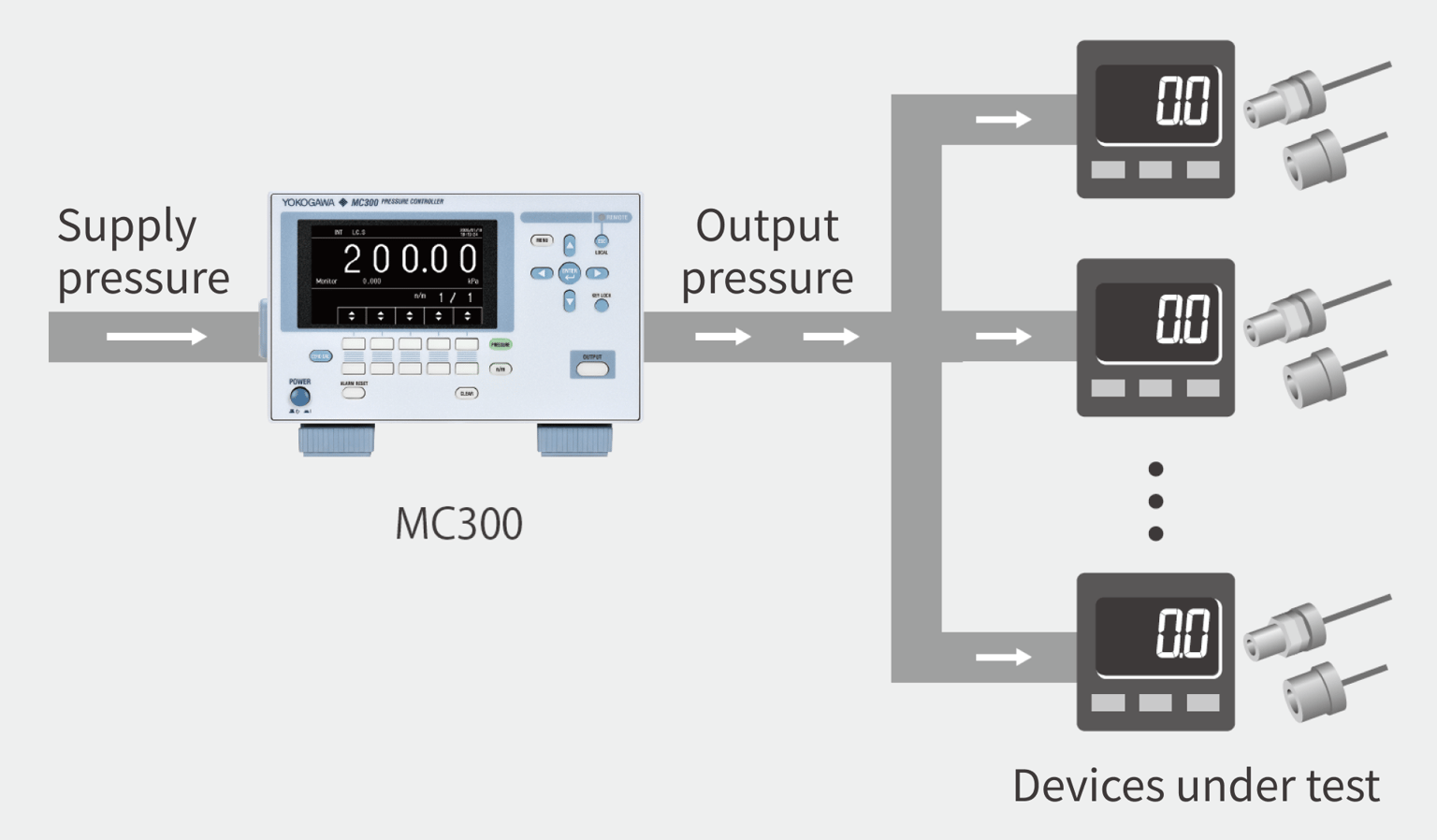
The MC300 Pressure Controller supports the final inspection process on mass-production lines by applying a specified pressure to the pressure sensor under test quickly and stably. Its built-in sensor lets you check the output pressure in real time, and by combining the divider output and auto-step functions, you can automate inspection steps during both pressurization and depressurization.
Challenges in Pressure Sensor Final Inspection
Driven by vehicle electrification, IoT adoption in industrial equipment, and increasingly advanced medical devices, pressure sensors are being built into an ever-wider range of equipment. Mass-production lines must shorten the inspection time per unit while ensuring the specified accuracy and repeatability and keeping equipment operating stably. The performance and durability of the pressure generation equipment used in the inspection process are key factors that strongly influence inspection takt time, data reliability, and equipment maintenance costs.
Time to Reach the Setpoint and Stability
In mass-production line inspection, takt time is determined not only by how quickly the pressure reaches the setpoint but also by how long it takes for the pressure to stabilize after reaching it. Any residual excess pressure prolongs the wait for stabilization and reduces inspection efficiency.
The Trade-Off Between Speed and Stability
Typical solenoid-valve-based pressure controllers regulate pressure by rapidly opening and closing their valves. This design is prone to a trade-off: increasing speed results in larger overshoot, while prioritizing stability slows the response. This stands in the way of shorter takt times.
Inspection Workload During Both Pressurization and Depressurization
Pressure sensor performance evaluation requires checking hysteresis and response characteristics not only during pressurization but also during depressurization. In mass-production inspection, repeating each pressurization and depressurization step manually or through individual operations is labor-intensive.
Durability and Maintenance Burden of Solenoid Valve Systems
Because solenoid valve systems repeatedly open and close their valves, the maintenance burden caused by component wear becomes an issue in long-term operation. On mass-production lines, this raises concerns about higher equipment maintenance costs and impacts on stable production.
Solution with the MC300 Pressure Controller

Smooth Pressurization to the Setpoint
The MC300 uses a needle valve servo mechanism that continuously adjusts the airflow by positioning a motor-driven needle. Because it does not rely on rapid valve opening and closing, it performs fine flow control as the pressure approaches the setpoint, reaching the setpoint quickly while suppressing overshoot. Under typical conditions, it achieves a response time of 5 seconds or less, resolving by design the trade-off between speed and stability that solenoid valve systems tend to face.
Output Relative Accuracy of ±0.04%
By combining sensing with a silicon resonant sensor and needle valve control, the MC300 achieves an output relative accuracy of ±0.04%. Linearity and repeatability with low hysteresis provide a stable pressure reference that allows performance differences between individual sensors to be evaluated correctly, even in repeated inspections under identical conditions on mass-production lines. This accuracy is maintained throughout the 12-month guarantee period.
Divider Output and Auto-Step Functions
By setting a target pressure to match the full scale of the device under test and specifying any number of divisions, you can step up or step down with a single button press. The auto-step function continues step output automatically at a specified interval, enabling you to automate inspection processes during both pressurization and depressurization and helping reduce the labor required for manual and individual operations.
Long-Life Needle Valve Design
Because the needle valve mechanism uses continuous position control without rapid opening and closing, its structure keeps component wear low and maintains stable operation over the long term. Even in environments with long operating hours, such as mass-production lines, it helps reduce the frequency of repairs and maintenance caused by valve wear, leading to lower lifecycle costs.
Expected Benefits of Using the MC300
Using the MC300 offers the following potential benefits.
Shorter Inspection Takt Time
Combining high-speed pressurization with low overshoot through the needle valve mechanism shortens the time from reaching the setpoint to stabilization, which can reduce the inspection time per unit and is likely to contribute directly to higher productivity on mass-production lines.
More Efficient Pressurization and Depressurization Testing
The divider output and auto-step functions allow any desired pressure points to be output automatically in sequence. Automating inspection during both pressurization and depressurization reduces the labor hours spent on individual operations and the burden on operators, helping improve inspection efficiency.
Immediate Stability Confirmation
Real-time display of the output pressure measured by the built-in sensor, combined with comparator output, lets operators and inspection equipment immediately recognize when the pressure has reached and stabilized at the setpoint. This reduces variation in the time spent waiting for stabilization and can improve the reliability of inspection results.
Long-Term Stable Operation and Reduced Maintenance Burden
The long-life design of the needle valve mechanism and stable accuracy throughout the 12-month accuracy guarantee period can meet the need for long-term stable operation on mass-production lines. With stable performance between periodic calibrations, it can also help reduce lifecycle costs.
Related Content
MC300 Pressure Controller
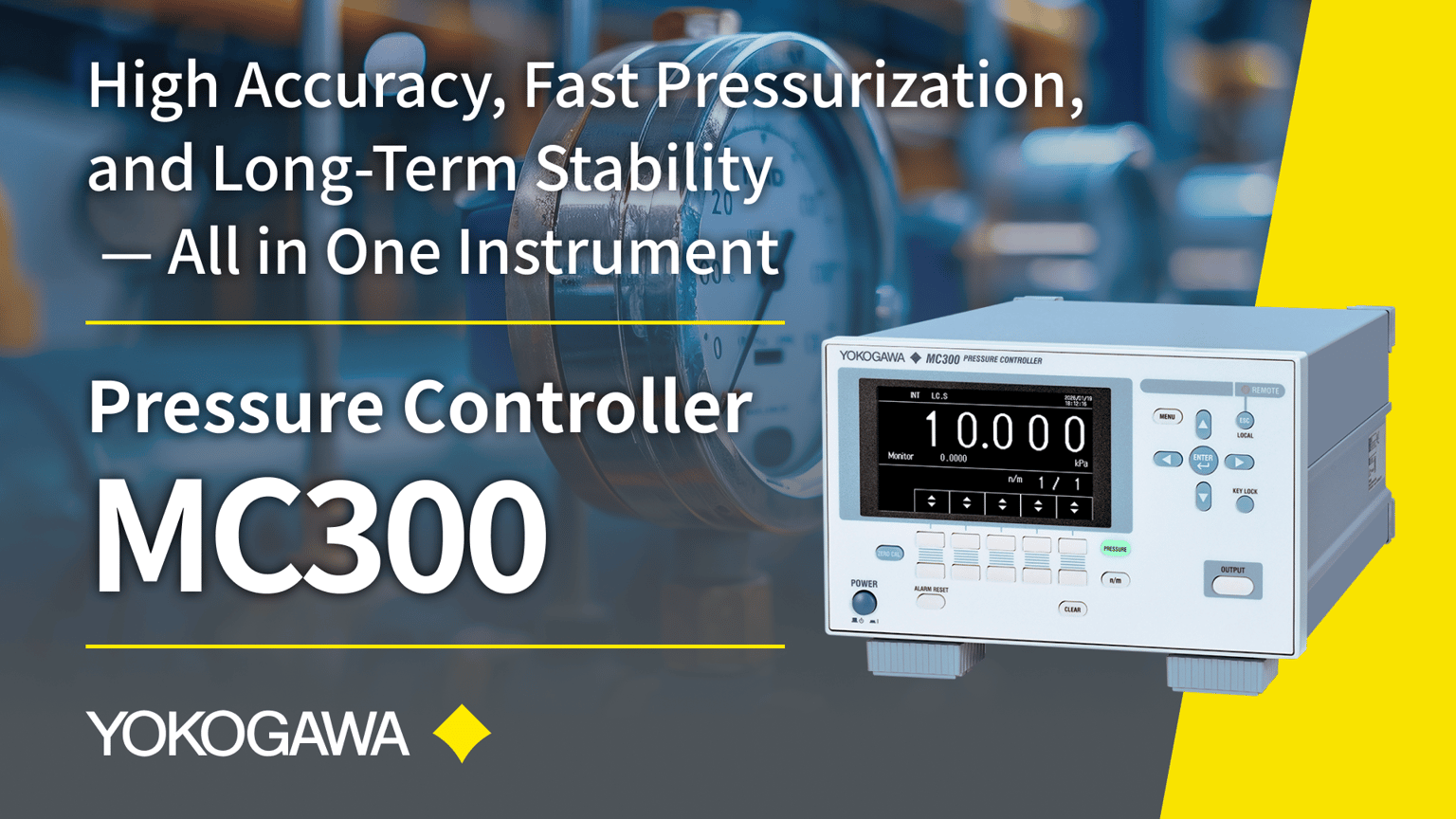
The MC300 Pressure Controller incorporates Yokogawa's proprietary silicon resonant sensor and a needle valve servo mechanism to deliver high-accuracy pressure control. With an output relative accuracy of ±0.04% and a 12-month accuracy guarantee period, it provides stable pressure control over extended operating periods. The MC300 is used across a wide range of process management and production automation applications that require precise pressure control, including production line inspection of pressure sensors and pneumatic devices, compliance testing of blood pressure monitors, leak testing of enclosures, and calibration of differential pressure and pressure transmitters.
About Yokogawa Test & Measurement Corporation
Developing, Manufacturing, and Delivering Precision Measurement Solutions
Yokogawa Test & Measurement Corporation is the test and measurement instrument business of the Yokogawa Electric Group. The company develops, manufactures, and sells a wide range of precision measurement solutions, including oscilloscopes, power analyzers, data acquisition systems, optical communication test equipment, and pressure measurement instruments.
The Yokogawa Electric Group has a track record of over 100 years in the development and provision of precision measurement instruments. In the field of pressure measurement, the group has accumulated technology over many years and developed a pressure measurement platform built around its proprietary silicon-based resonant sensor technology. Through a product portfolio spanning from lab to field — including the MT300, the CA700 Pressure Calibrator, and the MC300 Pressure Controller — Yokogawa supports customers' pressure measurement needs.
| Presenter Name | Yokogawa Test & Measurement Corporation |
|---|---|
| Address | 9-8, Myojin-cho 4-chome, Hachioji-shi, Tokyo 192-8566, Japan — Keio Hachioji Myojin-cho Building |
| Established | July 1954 |
| URL | https://tmi.yokogawa.com/ |